
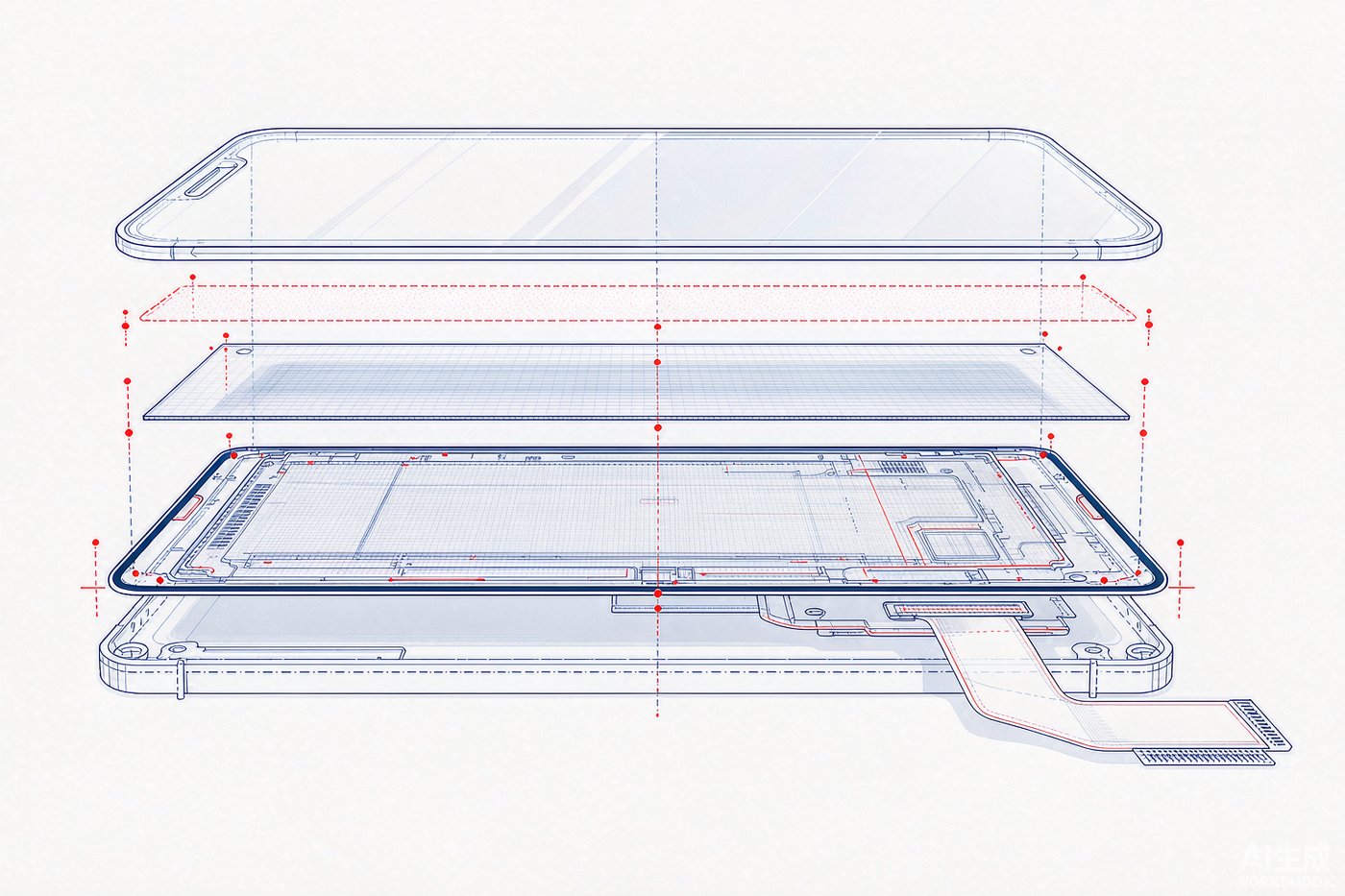
iPhone Outer Glass Repair: An In-Depth Analysis from a Screen Engineer’s Perspective
August 23, 2026 · Screen Engineer
Does a cracked iPhone screen always require replacing the entire display assembly?
When an iPhone is dropped and the screen cracks, most people assume the display is a total loss and that only a full display assembly replacement will do. But in real repair scenarios, a large share of failures affect only the outermost protective cover glass, while the OLED display and touch functions underneath remain fully intact.
From a hardware standpoint, an iPhone screen is a precision, fully laminated multi-layer composite. If only the outer glass is cracked, it is theoretically possible to replace the cover glass alone and complete the repair. However, this is not simply swapping a sheet of glass — it is micron-level precision work. Equipment conditions, material selection, process control, and screen encryption data handling all matter; a mistake in any one of them leaves behind various after-effects. This article analyzes, from a screen engineer’s perspective, the applicable conditions, complete workflow, existing industry pain points, and repair selection advice for iPhone outer glass repair.
1. Understand the Screen Layers: Distinguishing “Outer Glass Damage” from “Inner Panel Damage”
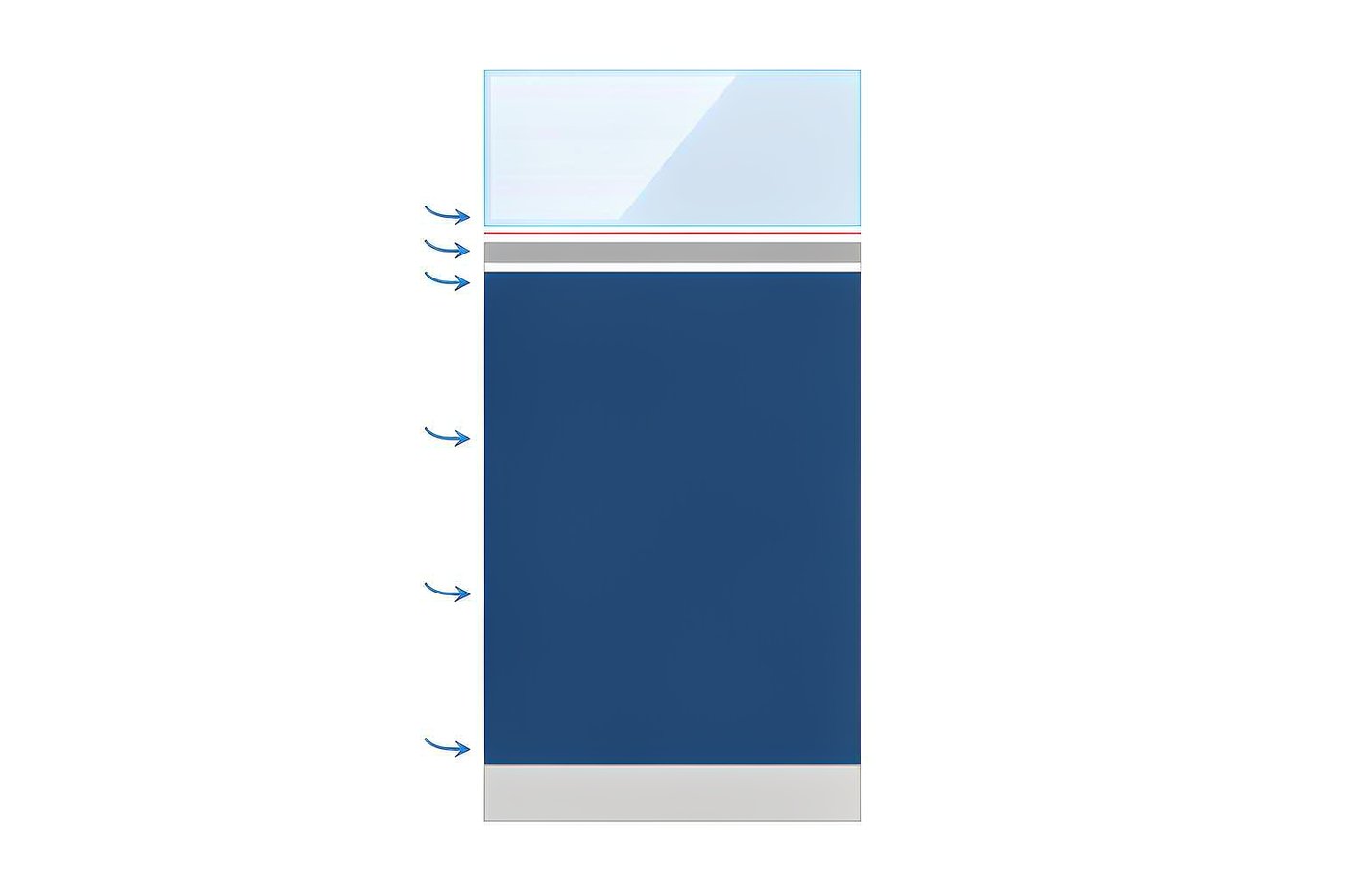
An iPhone OLED screen consists, from outside to inside, of the cover glass, OCA optical adhesive, polarizer, OLED emissive layer, touch sensing layer, and flexible driver flex.
- Cover Glass (outer screen): the outermost protective glass. iPhone 12 and later models use Ceramic Shield glass, providing impact resistance and scratch protection. If cracks appear only on the surface glass while display and touch remain normal, this is pure outer glass damage.
- OCA Optical Adhesive: a transparent optical adhesive 0.1–0.15 mm thick that bonds the cover glass tightly to the OLED panel for a fully laminated, air-free effect. It is also the biggest challenge in the repair separation process.
- OLED Panel: the core of the display. Once damaged, you will see black spots, liquid leakage, colored lines, a scrambled screen, or partial touch failure. In these cases, outer glass replacement alone is not recommended — the entire display assembly should be replaced.
✓ Outer glass repair is suitable only if ALL of the following conditions are met:
- Cracks exist only on the outer cover glass;
- The display is fully normal — no black spots, liquid leakage, or horizontal/vertical colored lines;
- Full-screen touch responds accurately, with no dead zones or ghost touches;
- Under strong light inspection, the polarizer is not damaged by compression from broken glass.
✗ Outer glass repair is NOT recommended when:
Liquid leakage, colored lines, black spots, or partial touch failure indicate physical damage to the OLED panel. Even if you force a glass replacement, the original damage will continue to worsen and the fault will recur within a short time.
Note: Apple’s official after-sales service does not offer standalone outer glass replacement — if the screen is cracked, Apple uniformly performs a full display assembly replacement.
2. Complete Workflow of iPhone Outer Glass Repair
Commonly called “screen lamination (glass pressing)” in the industry, the repair logic is to keep the original OLED panel, separate and remove the cracked old cover glass, and laminate a brand-new cover glass. The entire process must be completed in a dust-free environment with professional equipment — it cannot be done with a simple heat gun teardown.
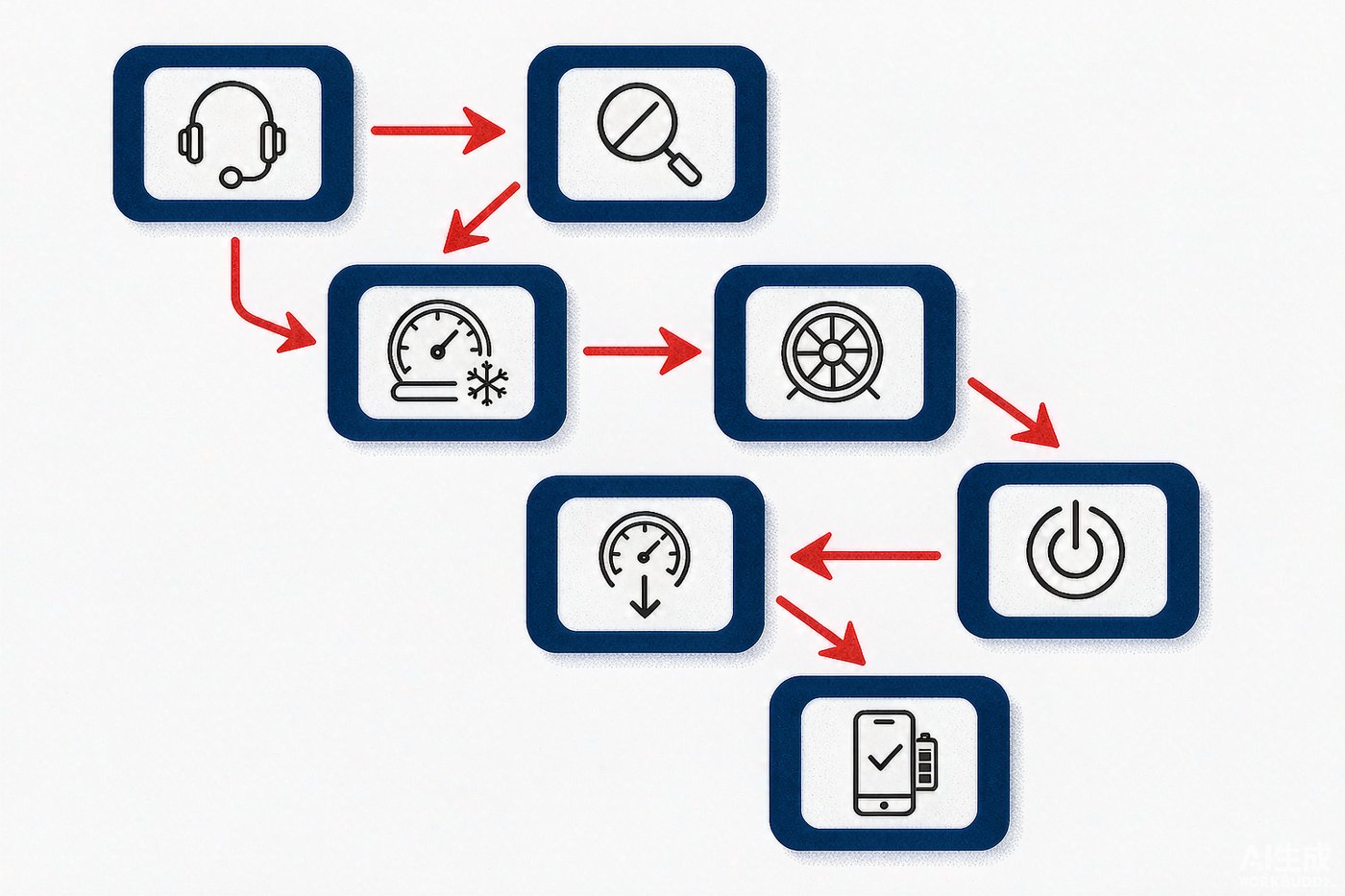
- Pre-repair screen data backup: use a dedicated programmer to read and save the original screen’s cover calibration data, color parameters, and touch calibration. On iPhone 12 and later, the screen encryption data is bound to the motherboard; without a pre-repair backup, True Tone will be permanently lost after the repair.
- Remove the metal frame: soften the frame adhesive with constant-temperature heating, then carefully peel off the metal frame around the screen, avoiding pulling that could damage the flex cable.
- Freezing separation: place the screen in a freezing separator to embrittle the OCA at low temperature; use 0.06 mm molybdenum wire to cut evenly along the OCA layer, separating the cracked cover glass from the OLED panel.
- Panel adhesive removal & dust-free cleaning: remove residual OCA on the panel surface on a constant-temperature workbench, then repeatedly clean the panel in a dust-free environment. Tiny dust left behind causes white spots and bubbles after lamination.
- New cover glass vacuum lamination: match a qualified cover glass and OCA, complete alignment and pressing on a vacuum laminator, and control alignment error to avoid frame offset.
- High-pressure bubble removal: send the screen into an autoclave for high-pressure treatment to eliminate micro-bubbles from lamination.
- Encryption data write-back & full function test: write back the pre-backed-up screen calibration data to restore True Tone; after assembly, run a full test — display, touch, True Tone, Dynamic Island, Face ID, and auto-brightness — to verify all functions.
Process difficulty: any slight deviation in the molybdenum wire path scratches the polarizer and causes permanent horizontal lines; the iPhone 15–17 series has even narrower bezels, leaving less margin for error.
3. Advantages and Objective Risks of Outer Glass Repair
Repair advantages
- Keeps the original OLED panel: the original screen’s color accuracy, peak brightness, and ProMotion high refresh rate are fully preserved — a quality that third-party assembled displays can hardly match;
- Repair cost is far lower than replacing with an original assembly;
- After repair, the device holds its resale value better than one with a third-party assembled screen.
Objective industry risks
- Process-related defects: insufficient dust-free conditions or inexperienced technicians can easily cause bubbles, white edges, horizontal lines, and later touch issues;
- Clear material quality gap: low-grade cover glass has poor oleophobic durability and light transmittance; low-quality OCA turns yellow over time, directly affecting the visual experience;
- Reduced sealing: after screen disassembly, the factory-level water resistance cannot be restored;
- Lost encryption features: many repair shops skip the data backup and write-back step — the screen is fixed, but True Tone is permanently disabled.
Important: for severely cracked screens where glass debris presses against the panel edge, even if the display and touch work fine right now, there may be hidden panel damage with a risk of future failure.
4. Tips to Avoid Pitfalls When Choosing a Repair Service
Don’t simply compare prices. For the same “outer glass replacement” label on the market, price differences come from: whether screen data backup/write-back is performed, cover glass grade, OCA material quality, dust-free conditions, and equipment configuration. Low-price options often skip encryption data handling entirely and directly lose the True Tone feature.
Confirm three key items before repair: ① whether screen data is backed up in advance and True Tone restored after repair; ② the grade of the cover glass and OCA used; ③ the after-sales warranty scope — whether bubbles and touch issues are covered.
A quick comparison of three repair options
- Outer glass lamination repair: for outer-glass-only cracks; keeps the original display; excellent value; but demands the highest repair skill.
- Third-party brand assembly: for inner-panel damage; quality varies widely; some models support True Tone write-in.
- Official assembly replacement: stable and reliable quality; highest cost; fully preserves the device’s water resistance.
Conclusion
iPhone outer glass repair is a mature and viable repair solution, but it is a high-skill-barrier task — it is by no means simply sticking a piece of glass back on. Many users fall into the misconception that a cracked outer glass is a minor issue, overlooking the full set of capabilities required: equipment environment, material quality, technician experience, and encryption data handling. When facing a cracked screen, the first step should be a complete inspection to confirm whether the OLED panel itself has hidden damage, and only then decide on the final repair plan.
In upcoming posts, we will continue publishing industry analysis on iPhone touch failure, ghost touches, liquid leakage, and other screen faults.